
English as a Foreign Language at a Rural Context
In the complex pulse of rural life, learning a new language can feel like opening a window to the wider world. Learning and teaching English in rural communities is far more than grammar lessons or vocabulary lists: it is an invitation to step into conversation with global cultures, to discover different ways of thinking, and to celebrate the richness of diversity. English becomes a bridge: a bridge that connects learners to opportunities beyond borders, and a bridge that invites the world to appreciate the unique voices of rural students. When young people in rural contexts engage with the English language, they do not only acquire a skill—they claim a place in the global dialogue, sharing their perspectives, their stories, and their dreams.

This webpage is dedicated to that narrate and describe a journey of students who learn with curiosity and courage, and the communities that grow stronger when languages and cultures meet. Together, we explore how English language learning and teaching in rural settings can ignite understanding, expand possibilities, and remind us that diversity is not just something to study—it is something to learn through.
Description
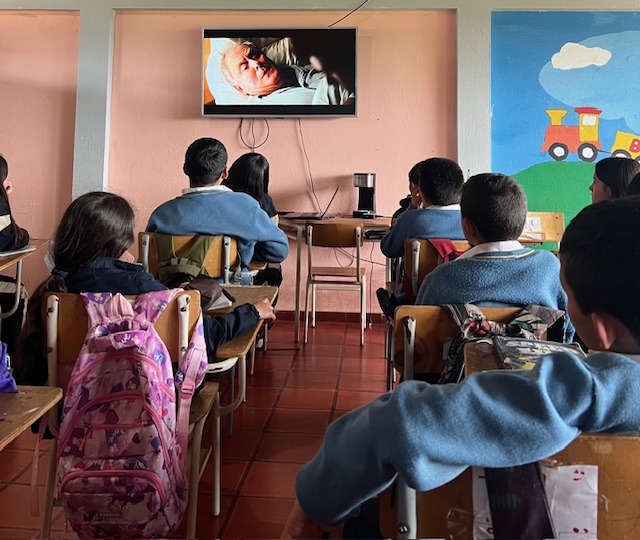
In today’s classrooms, learning English becomes a vibrant, dynamic experience when technology, music, and movies come together as interactive gateways to language and culture. These tools do far more than support instruction: they bring English to life. Technology offers immediate access to global voices and real-world contexts; music invites learners to feel rhythm, emotion, and authentic expression; and movies immerse students in stories that reveal how people think, speak, and connect across cultures.
Through these interactive strategies, learners do not simply study English: they engage with it. They listen, respond, create, and reflect, discovering not only new words but new perspectives. By blending digital tools with artistic expression, teachers open paths for students to explore the richness of English-speaking cultures and to understand the diverse experiences that shape them. In this way, language learning becomes a journey that is engaging, meaningful, and deeply human.
Images Gallery
Research Abstract
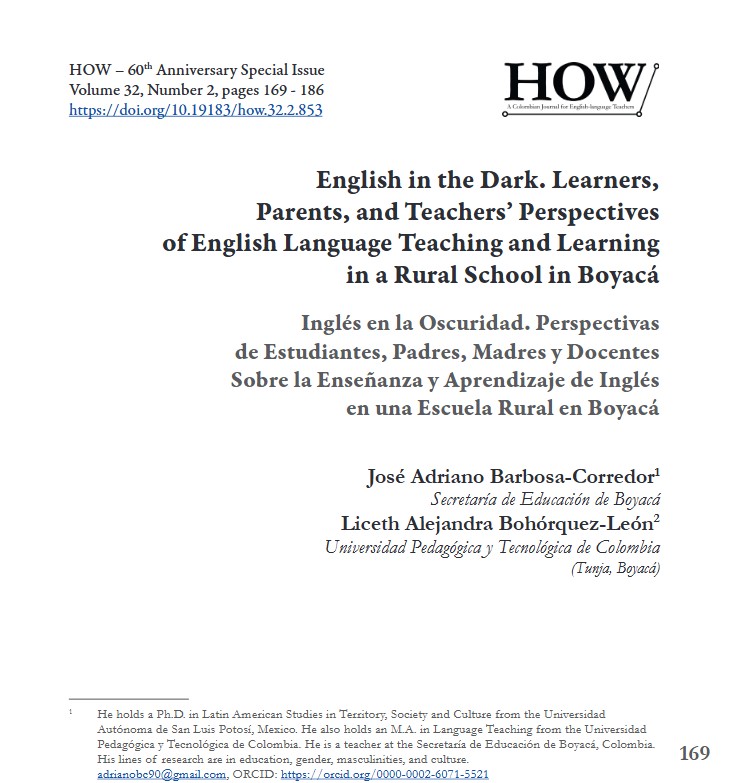
This article reports on research conducted at a rural school located in Boyacá, Colombia, as part of an ethnographic exploration in which learners, parents, and teachers presented their perspectives about English Language Teacher/ Teaching (ELT) evolution, progress, and challenges within teaching and learning practices and community dynamics. Results offer a landscape of how English has been taught in a rural context, as well as the way English teaching and learning have changed in the last 60 years, concerning information access and institutional organization. The community acknowledges changes in terms of teachers’ qualifications and didactic strategies; they also point to challenges regarding material and technological resources in rural contexts. The case of the rural school illustrates how ELTeducation has evolved in Colombia along an ever-changing/challenging trajectory in the territories.Keywords: Education, English language learning, English Language Teacher/ Teaching, rural education
Available in https://www.howjournalcolombia.org/index.php/how/article/view/853/681
About Kahoot
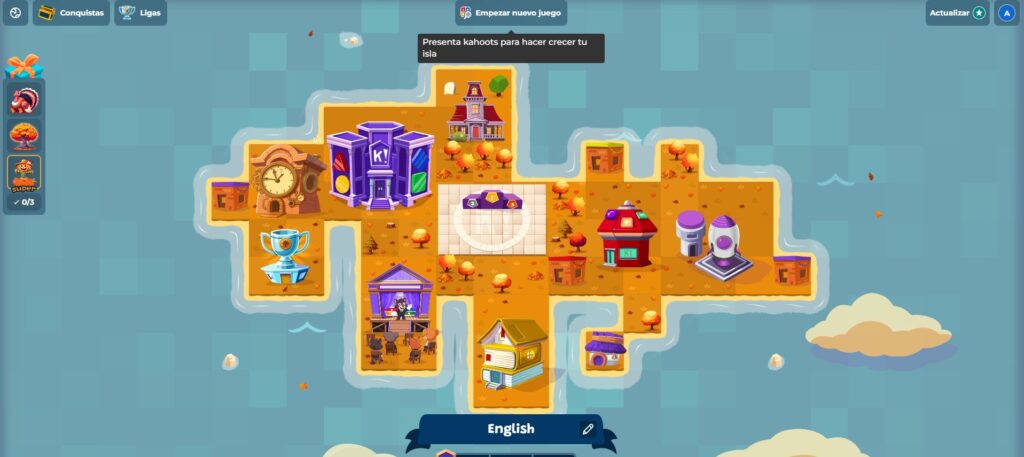
- Kahoot is an online, game-based learning platform that turns quizzes into lively, interactive competitions. Students answer multiple-choice questions in real time using a phone, tablet, or computer, while a shared screen displays the questions, rankings, and results. Its colorful design, fast pace, and playful atmosphere make learning feel like a game rather than a test—an approach that can be especially motivating for young learners.
- In rural settings, Kahoot becomes a powerful ally for teaching English as a foreign language. Even with limited resources, a single device and a basic internet connection can bring an entire class into the same interactive experience. Teachers can use Kahoot to practice vocabulary, grammar, pronunciation, reading comprehension, and cultural knowledge in ways that encourage participation from all students, including those who may be shy or hesitant to speak aloud.
- The platform also supports collaborative learning: students can work in pairs or groups to discuss answers, reinforcing communication in English while building confidence. Its immediate feedback helps teachers identify which topics need more attention and allows learners to track their own progress. By transforming English lessons into engaging challenges, Kahoot makes learning more dynamic, inclusive, and enjoyable—helping rural students connect with the language and with each other.
Remarks
Learning English in a rural Colombian context opens a doorway to cultural possibilities that reach far beyond the classroom. It empowers students to share their local traditions, stories, and perspectives with the wider world, while also giving them access to diverse global voices that enrich their own understanding. As rural learners explore English, they discover new ways to express who they are, connect with others, and participate in cultural exchanges that honor both their heritage and their aspirations. In this meeting of languages and identities, English becomes not just a subject to study, but a tool for building bridges—bridges that allow rural communities to celebrate their uniqueness while stepping confidently into the global conversation.